

Brand Strategy Vs Marketing Strategy: Which Comes First?
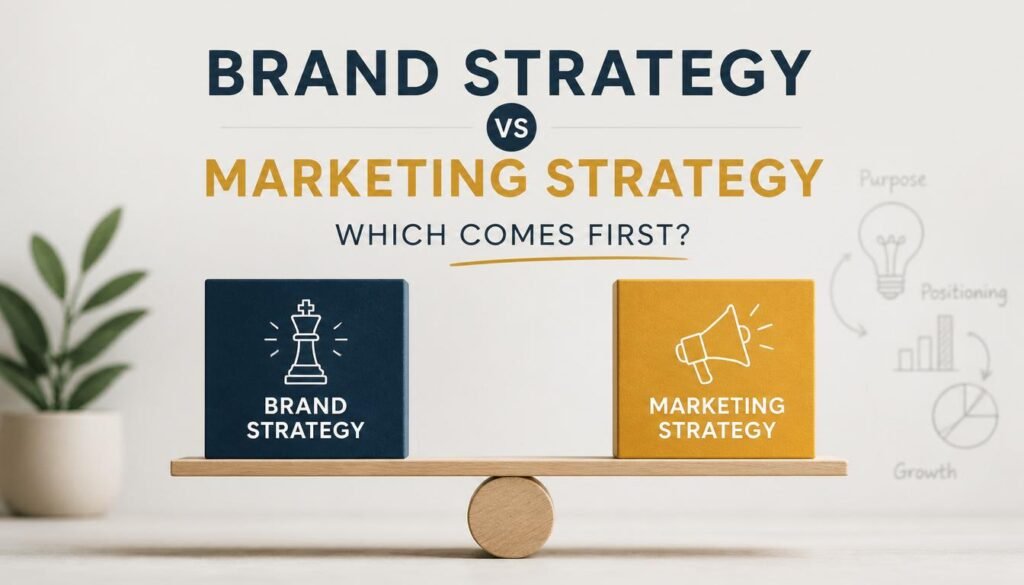
Brand strategy defines why your business exists and what it stands for, focusing on long-term reputation and customer trust.
Marketing strategy outlines the short-term actions and campaigns you use to reach customers and drive sales. You need a solid brand strategy first to give your marketing clear direction.
Many new business owners confuse branding with marketing. The two functions are not the same. You need both to build an efficient, scalable startup.
Here is exactly how brand strategy and marketing strategy differ, and how you can use them together to grow your business.
What Is The Exact Difference Between Brand Strategy And Marketing strategy?
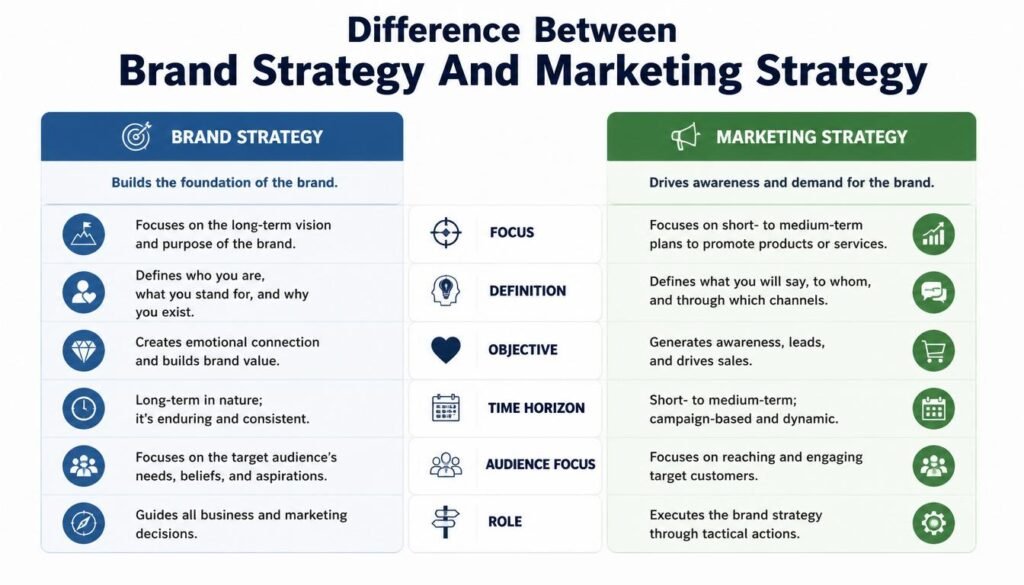
Brand strategy is your long-term plan. Marketing strategy is your short-term action plan.
Your brand strategy focuses on the “why” behind your business. This document defines your core values, your overall purpose, and your specific brand positioning. It dictates your company’s reputation and acts as your ultimate differentiating factor in the market.
Your marketing strategy focuses on the “how.” This strategy outlines the specific campaigns, content, and advertisements your startup will use to communicate key messages to buyers. Marketing strategies change frequently based on budget constraints, seasonal sales peaks, and competitor actions.
According to LinkedIn, consistent branding can increase business revenue by up to 23%. Some founders think branding is just a logo or a color palette. Sure, visual identity matters. However, true brand strategy covers your entire market reputation, which ultimately drives scalable growth and makes your marketing efforts much more effective.
Why Should SME’s Focus On Brand Strategy First?
Your brand strategy must come first. You cannot market a product efficiently if you do not know your core message. Building a marketing plan before a brand plan is like building a house without a foundation.
Setting up your brand strategy first provides several distinct benefits:
- Clear identity: A brand strategy defines exactly what your startup stands for, which helps you stand out from established competitors.
- Customer trust: A strong brand helps buyers feel confident in your affordable solutions.
- Better marketing direction: A clear brand identity gives your marketing team strict rules to follow, saving you time and money on wasted ad spend.
Choose to prioritize your brand strategy first if long-term customer loyalty and sustainable growth matter more to you than a quick, one-time sale.
How Do Marketing Campaigns Build On Brand Strategy?
Marketing takes your brand message and puts it directly in front of buyers. Once you know who you are, your marketing strategy dictates which channels you use to find your audience.
According to Genesys Growth, business-to-business content marketing generates an average 3:1 return on investment. Marketing focuses on these specific tactics, such as social media posts, email newsletters, and paid search advertisements. A good marketing strategy adapts to current trends while keeping the core brand message entirely intact.
Choose to focus heavily on your marketing strategy if you already have a well-defined brand identity and need to generate immediate revenue.
How Can Startups Build a Cost-Effective Brand and Marketing Plan?
Startups face strict budget constraints. You do not need an expensive agency to define your strategies. Focus on clear, user-friendly solutions.
First, write down your core values and business purpose on a single page. This becomes your foundational brand strategy. Next, use affordable, scalable tools to run your marketing campaigns. Focus on low-cost channels like organic social media and search engine optimization before you spend heavily on paid advertisements. Stop guessing with your limited budget. Define your brand strategy today, then build a targeted marketing strategy to share your customizable solutions with the world.
FAQs
A brand strategy includes your business purpose, core values, brand positioning, and visual identity. These specific elements work together to build long-term trust and separate your startup from local competitors.
Startups should allocate a small, affordable percentage of their projected revenue toward marketing. Focus on cost-effective channels like content marketing, email outreach, and organic social media before spending heavily on paid advertising.
Yes. Marketing strategies change often based on campaign performance, seasonal sales peaks, and new market trends. Brand strategies have deep roots and remain stable over a long period of time to build equity.
Startups often lack documented brand guidelines and dedicated marketing teams. This leads to mixed messages across different platforms. Creating a simple, one-page brand strategy document helps keep all future marketing campaigns.