

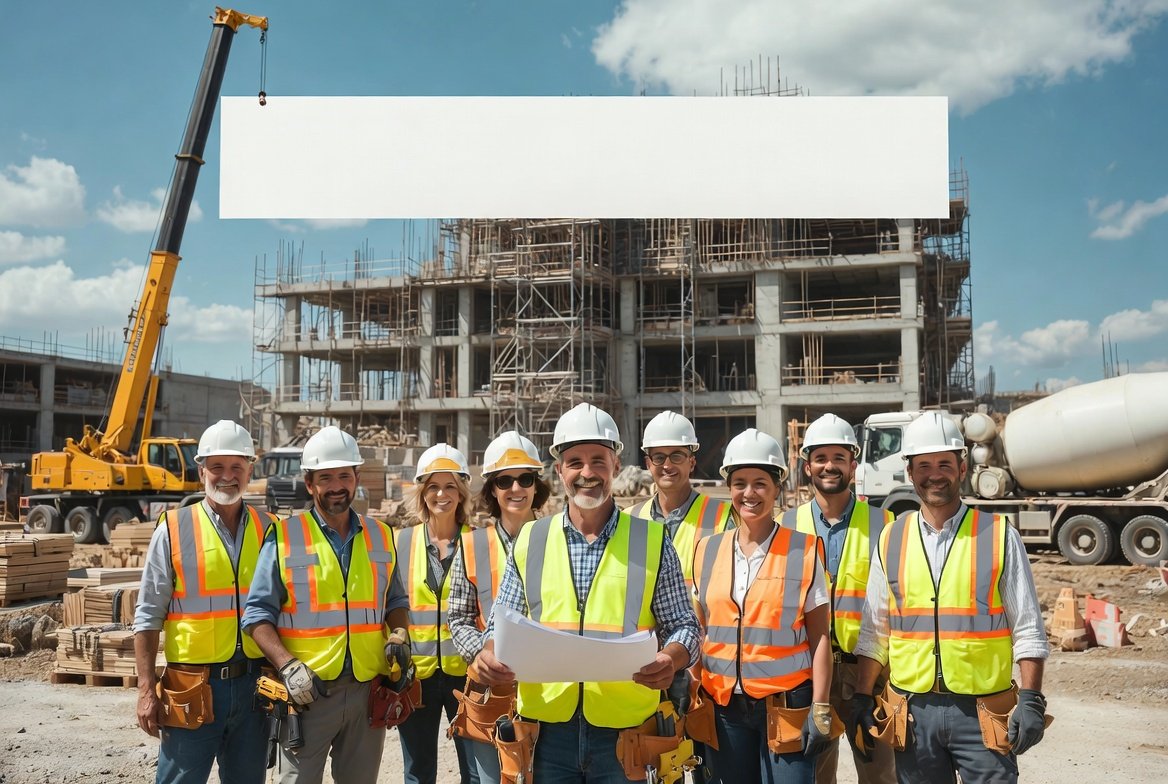
Word of mouth is no longer enough to scale a construction business. According to the Associated General Contractors of America, 74% of construction firms are increasing their investment in digital marketing. They know exactly where the market is heading.
If you want to win more bids and attract better clients, you need a digital marketing strategy that works as hard as your crews do. The businesses writing off digital marketing as a fad are the ones that will fall behind. Here is exactly how to build an online presence that generates consistent, high-quality leads.
Digital Marketing for Construction Companies
Your online presence starts with your website and how easily search engines can read it. You need a solid foundation before you start building.
Website Optimization: Your Digital Showroom
A website is your hardest-working salesperson. According to the Construction Marketing Association, construction companies with optimized websites generate 3.5 times more leads compared to those with a basic web presence.
Your site must look professional, load quickly, and function perfectly on smartphones. According to Google’s construction industry insights, 67% of construction-related searches now occur on mobile devices. If your site requires clients to pinch and zoom to read your service list, they will leave.
To turn your website into a lead generation machine, focus on these elements:
- Clear contact forms on every page
- High-resolution images of completed projects
- Mobile-friendly navigation menus
- Fast load times for heavy image galleries
Search Engine Optimization (SEO) for Construction Companies
Having a website means nothing if no one visits it. According to the Construction Marketing Association, 82% of construction project research begins with online searches. SEO is how you ensure your company shows up first.
SEO fundamentals do not require a lot of technical expertise. Even beginners can get results by starting with keyword research, then building content quality and site structure around what they find. You need to target the exact phrases your ideal clients type into search engines.
Local SEO Strategies for Construction Businesses
Local SEO is the most profitable digital strategy for regional contractors. According to BrightLocal, 93% of consumers use the internet to find local businesses, and “construction company near me” searches increased by 35% last year.
Your Google Business Profile is your most valuable local asset. According to BrightLocal’s 2023 Local SEO Industry Report, construction firms with complete and regularly updated Google Business Profiles receive 156% more direct inquiries than those with basic listings. Claim your profile, verify your address, and upload new photos every month. Ask every satisfied client for a review.
Content Marketing Strategies
Showing your work builds instant credibility. Content marketing allows you to prove your expertise before a prospect ever picks up the phone.
Blogging: Showcasing Expertise and Projects
Blogging is not just for software companies. Publishing articles about common construction challenges proves you know your trade. It also gives search engines more reasons to rank your website.
Write about topics your clients actually care about. Explain the difference between popular building materials. Share a detailed timeline of a recent commercial build. Answer the questions your sales team hears every day.
Visual Content: The Power of Photos and Videos
Construction is an inherently visual industry. You build physical things, and people want to see them.
Drone footage, time-lapse videos, and high-quality photography capture attention faster than any written text. Start documenting your sites. A time-lapse video showing a foundation pour or a framing sequence demonstrates scale and competence in ways words cannot.
Case Studies and Testimonials: Building Trust
Clients want proof you can deliver on time and on budget. Case studies provide that proof.
Do not just post a nice photo and move on. Explain the initial problem, detail your specific solution, and share the final outcome. Pair this narrative with a direct quote from the client. Reading a testimonial from a satisfied property developer does more heavy lifting than any sales pitch.
Social Media for Construction Companies
Social media is a networking event that never ends. You need to show up where your ideal clients spend their time.
Choosing the Right Platforms
Not all social media platforms make sense for construction. You need to match the platform to your specific audience.
LinkedIn is mandatory for commercial contractors and B2B companies. It is where developers, architects, and facility managers network. Share industry insights, company milestones, and job openings here.
Instagram is highly effective for residential contractors and remodelers. Homeowners use Instagram for inspiration. Post before-and-after photos, material selections, and short video tours of completed spaces.
Engaging Your Audience and Showcasing Work
Posting content is only half the job. You must also interact with the people who see it.
Respond to comments quickly. Answer questions about materials or timelines directly in the comment section. Engage with posts from local architects, engineering firms, and suppliers. This builds a digital network that often translates into real-world referrals.
Paid Advertising for Construction Companies
Organic growth takes time. Paid advertising puts you in front of clients who are ready to hire right now.
Google Ads for Construction Services
Google Ads places your business at the very top of the search results for specific keywords. When someone searches for “commercial roofing contractor Dallas,” you can pay to guarantee they see your name first.
This strategy requires careful budget management. According to recent benchmarking data from Axis AI, the average cost per lead for home improvement contractors sits around $90.92. You must ensure your landing pages are built to convert, otherwise you will burn through your budget quickly.
Social Media Advertising
Social media ads allow you to target people based on demographics, interests, and job titles. You can run Facebook ads targeting homeowners in a specific zip code, or LinkedIn ads targeting commercial property managers across the state.
Use these platforms to retarget people who have already visited your website. It keeps your brand in front of them while they make their final hiring decision.
Measuring Success and Adapting
Digital marketing produces a massive amount of data. You must track this data to understand what actually drives revenue.
Key Performance Indicators (KPIs) for Digital Marketing
Focus on the metrics that impact your bottom line. Impressions and page views look nice, but they do not pay the bills.
Track these specific KPIs:
- Total number of qualified leads generated per month
- Cost per lead (CPL) by channel
- Website conversion rate
- Traffic sources driving the highest quality inquiries
Analytics and Reporting
Install Google Analytics on your website immediately. Review your traffic data at the end of every month.
Identify which pages keep visitors engaged and which pages cause them to leave. If a specific blog post generates five leads a month, write more content on that topic. If a paid ad campaign spends $500 without a single phone call, pause it and rewrite the copy.
Paving the Way for Future Growth
Digital marketing is an ongoing process, not a one-time project. The construction companies that dominate their local markets are the ones that consistently publish great content, optimize their local profiles, and track their data. Start by auditing your current website and claiming your Google Business Profile. Fix the obvious errors first, then move on to advanced strategies like content creation and paid advertising. Take control of your digital presence today.
FAQs
Word-of-mouth alone is no longer enough to grow a construction business. According to the Associated General Contractors of America, 74% of construction firms are increasing their investment in digital marketing. Most clients, developers, architects, and homeowners now start their search on Google. A strong digital strategy puts your company in front of high-intent prospects, helps you win more bids, and generates consistent, high-quality leads.
Local SEO is one of the most effective strategies for contractors. Start by claiming and fully optimizing your Google Business Profile, add accurate details, upload fresh project photos every month, and encourage client reviews. Combine this with location-specific keywords, a fast mobile-friendly website, and targeted service pages. Construction firms with complete and active Google Business Profiles receive 156% more direct inquiries.
Construction is a highly visual industry, so photos, drone footage, time-lapse videos, and before-and-after project images perform exceptionally well. On your blog, publish educational content such as material comparisons, project case studies, and answers to common client questions. Use LinkedIn for B2B networking and commercial work, and Instagram for residential projects and homeowner inspiration. This approach builds trust and improves SEO at the same time.